
 Image 1 of 4
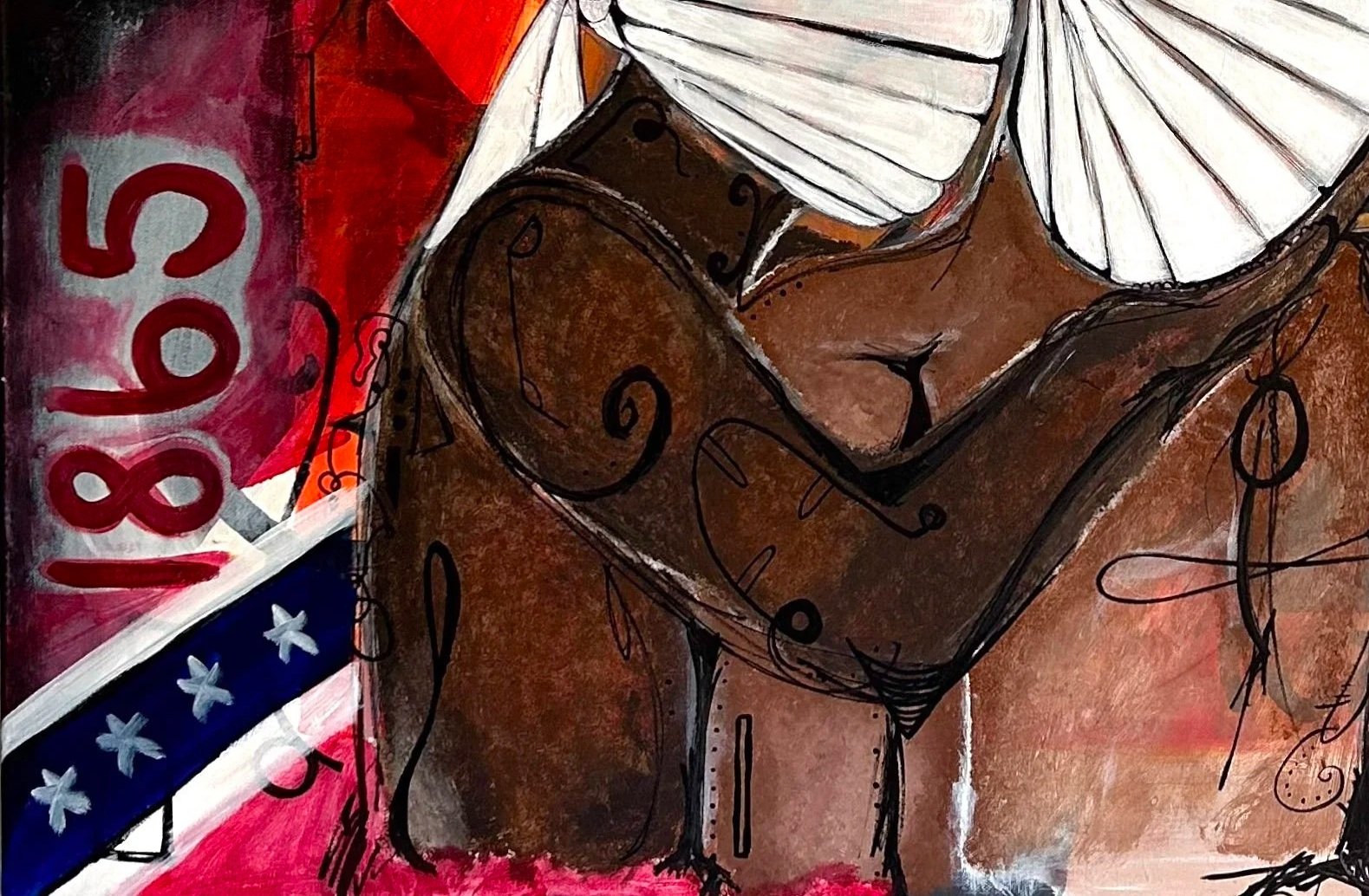 Image 2 of 4
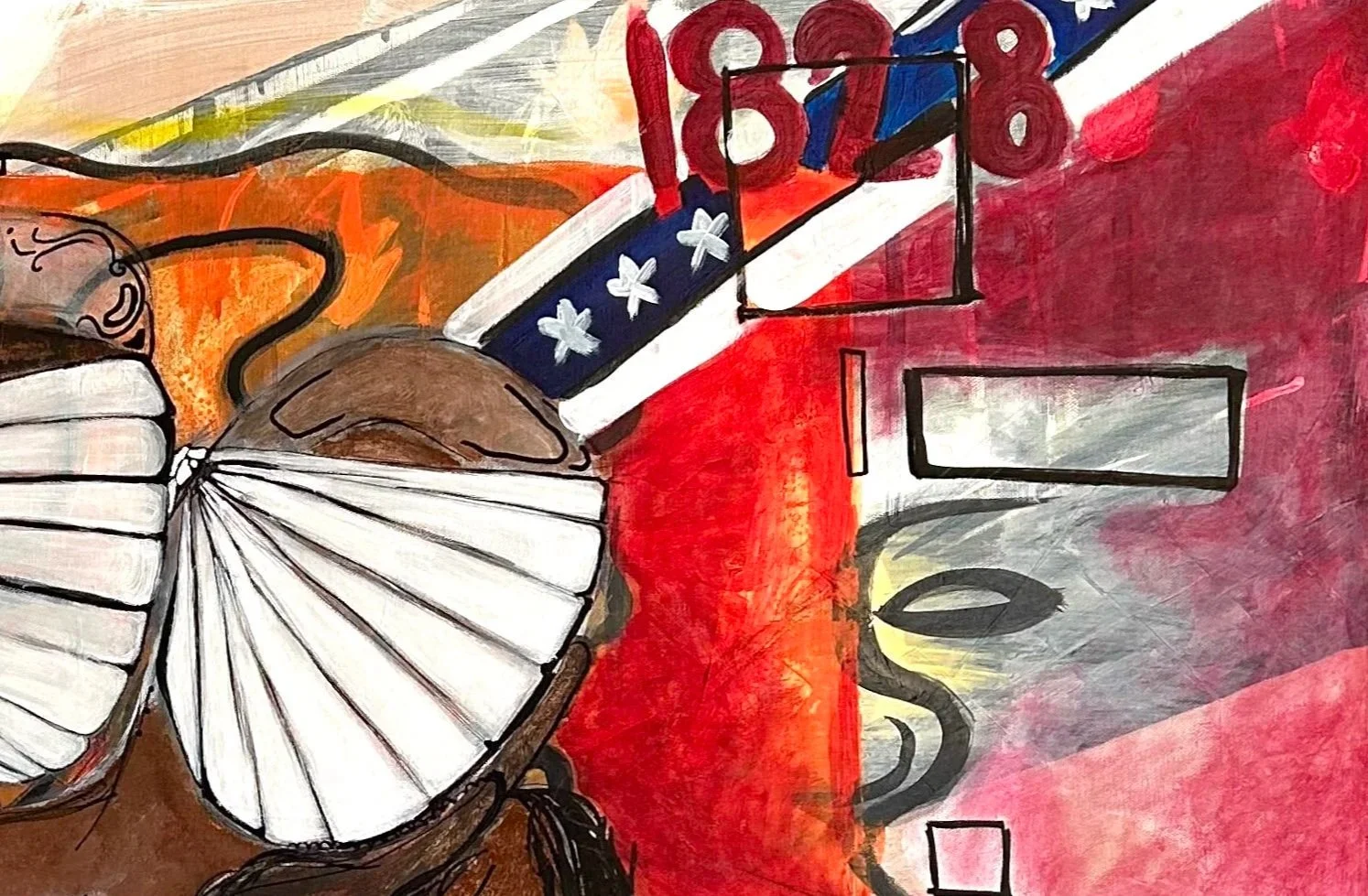 Image 3 of 4
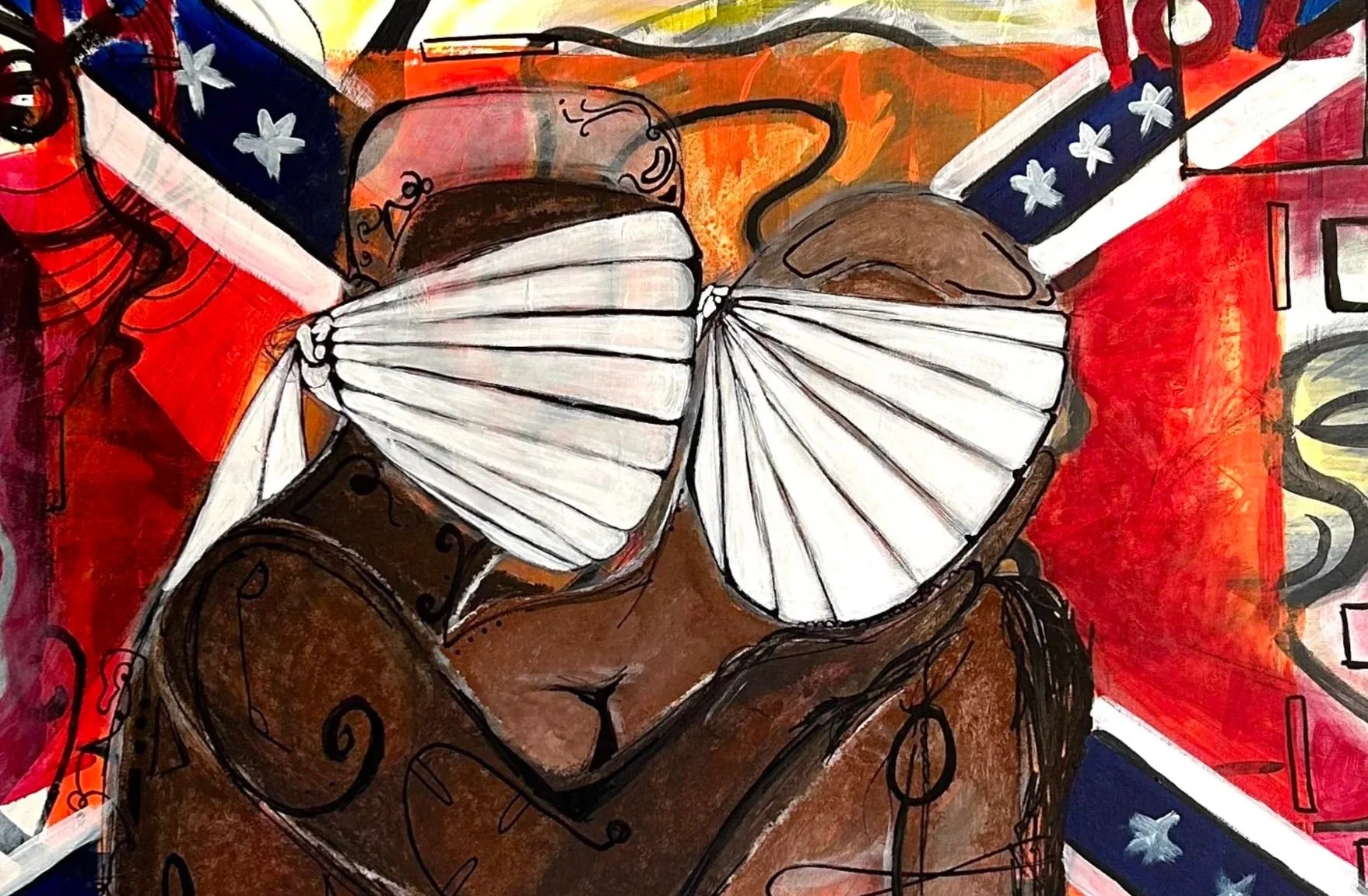 Image 4 of 4
It is a symbol, a story, a promise, a memory, and sometimes a contradiction.
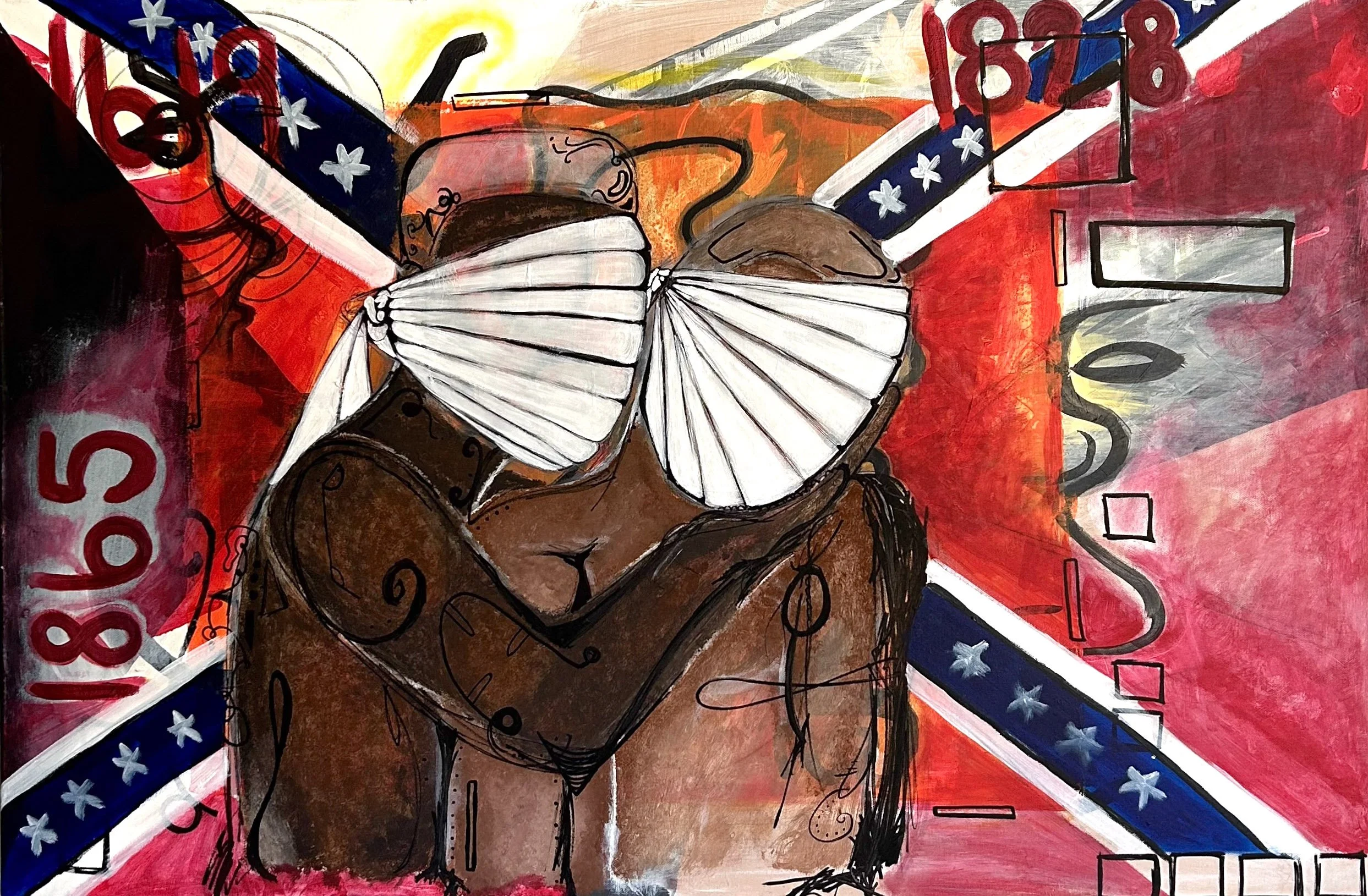
This painting and accompanying poem, Taking Dimes, explore the complexities of American identity, historical memory, and the representation of people of color within a nation built upon conflicting ideas of freedom and belonging.
Through fragmented figures, layered imagery, and the interweaving of American and Confederate symbolism, I examine the tension between the stories we are taught to inherit and the histories we are left to uncover. The figures within this composition remain open to interpretation, inviting viewers to consider who is represented, who is remembered, and who has been made invisible within the narratives surrounding American identity.
The dates and historical references scattered throughout the painting serve as invitations to investigate further. They encourage viewers to look beyond the familiar colors of the flag and explore the historical circumstances surrounding the Confederacy, racial representation, and the generations of people whose lives have been shaped by these histories.
I am interested in the discomfort that arises when familiar symbols begin to reveal unfamiliar histories. The American flag can represent pride, home, and freedom, while also carrying histories that complicate those ideals. The Confederate imagery within this work introduces another layer of tension, asking viewers to consider what these symbols represented historically and how their meanings continue to be encountered, remembered, and contested.
Rather than offering a single interpretation, I want this work to encourage curiosity, research, and conversation. I invite viewers to sit with the imagery, follow the historical references, and consider the experiences that exist beyond their initial understanding.
This work is not simply about the past. It is about what the past continues to carry into the present, what we choose to remember, and what we refuse to let disappear.
In August 1619, the first documented group of enslaved Africans arrived at Point Comfort, Virginia, aboard the English ship White Lion. Captured from a Portuguese slave ship, they were traded to English colonists for supplies. Their arrival marks a significant moment in the development of racial slavery in English North America, an institution that would shape generations of American life, labor, and identity.
The 13th Amendment was ratified on December 6, 1865, formally abolishing slavery throughout the United States, except as punishment for a crime. This marked a major legal transformation while leaving generations of Black Americans to confront the lasting consequences of enslavement and systemic inequality.
1828 marked a period of American expansion, Indigenous displacement, and the continued growth of slavery. Under his administration, policies like the Indian Removal Act opened Native lands to white settlement and plantation agriculture, exposing the contradictions between America's promises of freedom and the realities of racial exclusion and exploitation. Decades before the Confederacy formed, these histories were already shaping the nation's identity. This date invites viewers to question whose freedom was protected, whose land was taken, and whose stories were left out of the American narrative.